An old maxim teaches that nothing is in the intellect that was not first in the senses. But it is also true that the intellect combines at its whim the materials it gathers from the tumultuous well from which it receives them. That well opens onto an abyss not only of the ignoramus, but also of the gaze that seeks compassion. Stories are built in common — at least their unspoken part, the part made of sharp edges beneath the light that sets some days apart from others. From there the gods have arisen, with no one apparently having summoned them. From there too the heroes and the monsters: enemies and lovers, as courage and panic are, as life and death are. And at their centre of mass, sacrifice.
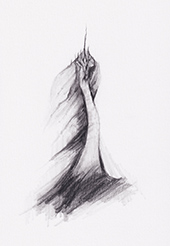

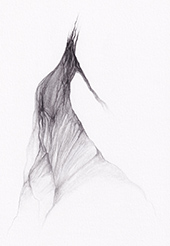
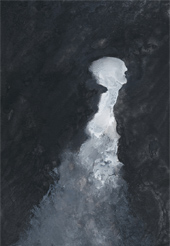
The matter of these beings is not the subtle void into which they were cast. They rise up from the rough stone and from the gaze that recognises in every form, however alien, the names of the most ancient sagas. When men first sought to think about them, and about the very language that gave them voice, the channels through which they flowed were already as firm and deep as if the wind and water, long before any thought, had carved them out.
But every river withers at some point. And if not, its waters are stilled by the thirsty dams of a conquered land. What once flowed free, without origin and capable of slaking every mystery, falls caged for the delight of the priests first, of the merchants afterwards. The rock is replaced by paper — dead matter on which the caricatures of a distant war are painted.
The ancient gods, the heroes and the monsters who raised them up, no longer remain except as gleaming puppets handled by expert puppeteers — products of an imagination that no longer belongs to anyone, but to the planners of ecstasy. Everything said about them is false: they are shown in the colours of the advertising hoarding, with the fatuity of the empires that wave them about.
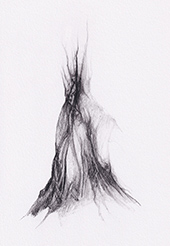
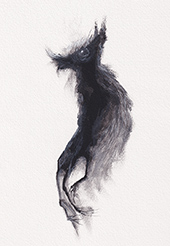
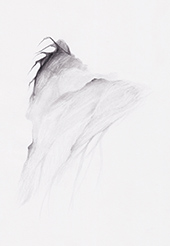
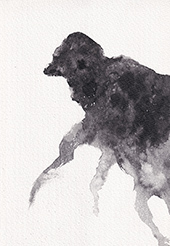
The series of drawings presented here seeks to return these figures to their truth. Their real context, brought up to date here, is that of shadow and deformity, of confusion, impotence, oblivion, and despair. These drawings do not point or define; they suggest, in the smudges, the textures, and the strokes, the forms of something that once was and now has no name, something that appears mingled with the pieces of other beings. Gods, heroes, and monsters can no longer be told apart: they are the archaic imagination, today exiled, that here peers out to remind us of what we were, and in part still are.