What Is Science Fiction?

On Chronicle of the Stellar Bridges To define science fiction with any rigour, we need a conception not only of science but also of technology, since what these stories most often present is a display of fabulous devices whose theoretical foundations are left implicit. Here we shall draw on the following text by the Spanish philosopher Gustavo Bueno (1924—2016) — … Read more →

Matrix and Gnosticism

The Matrix film saga set off a wave of armchair philosophers who saw in it a tale of almost mystical depths, a metaphysics renewed with the motifs of postmodernity. The matrix of Matrix is indeed metaphysical, but it is neither new nor does it engage with the heights of ontology, Western or Eastern. These films basically copy the structure of … Read more →

Exile of Gods, Heroes, and Monsters

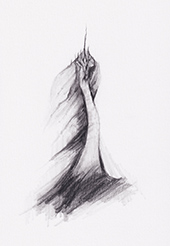
An old maxim has it that nothing is in the intellect that was not first in the senses. But it is also true that the intellect combines at its whim the materials it gathers from the tumultuous well that delivers them. That well opens onto an abyss not only of the ignoramus but also of the gaze that seeks compassion. Stories are built in common — at least their unspoken part, the part made of sharp edges beneath the light that sets some days apart from others. From there the gods arose, with no one apparently having summoned them. From there too the heroes and the monsters: enemies and lovers, as courage and panic are, as life and death are. And at their centre of mass, sacrifice.
Read more

From Pathways to Channels: Art, Culture, and Commodification

The anthropologist Ruth Finnegan coined the expression “pathways of urban life” to describe the musical practices of a small British town. These pathways are made up of the web of social acts of those taking part in that musical life, and they hold so long as the relationships, and the habits they produce, retain their force and continuity. It is … Read more →

The Justifications of Contemporary Art

The thesis to be set out here is the following: many works of current art present themselves wrapped in the text of their own justification — the catalogue text in which they are embedded — as though they were tied to it of necessity, when in reality the work itself, in its material-conceptual form, need not refer to that text … Read more →

Sketch of a Poetics: The Control of Inertias

Inertia is understood here in a sense close to the one set out by Newtonian physics in its first law, which we take as known. We apply this sense to any process or material state indifferent to the subject’s intentions and prior to his operations. As an example: a block of raw stone confronted by a sculptor is an inertia. … Read more →

The Perennial Tradition Does Not Exist

The perennial tradition — perennial philosophy, perennial wisdom, or eternal tradition — is supposedly the common substratum of all historical knowledge from the very origin of human culture: that which links together the great philosophical, religious, ethical, moral, and spiritual ideals, and so on. Well, this tradition does not exist. There are, of course, contents that may be shared, or … Read more →

The Myths of the “Free Press“

We take the term “mass media” in its common sense: companies that produce and disseminate messages. Their product is presented as the news — not as just any information, but as the relevant events. These media outlets justify themselves, through their professionals, by means of the following myths: These myths conceal something further: the commodity character of the contents these … Read more →

Traditional Cultures Are Not Traditionalist

Traditionalism is an ideology that regards certain past institutions as the most perfect and effective and links them with truth. It is a modern ideology, first explicitly formulated in the political circles that, in nineteenth-century France, reacted against the ravages of the Revolution. The concrete forms to which they appealed were those of the Ancien Régime: throne and altar. Since … Read more →